

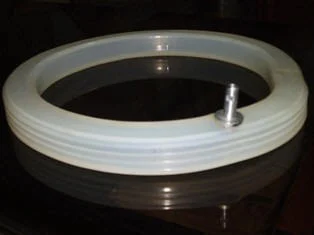
Here’s a more detailed write-up:
Purpose:
- Sealing the Environment: The primary function is to prevent any leakage of air, dust, or other contaminants into or out of the coating chamber. This is crucial for maintaining the purity of the coating process and achieving consistent results.
- Maintaining Pressure/Temperature: For some coating machines, especially those involving heating or vacuum processes, the gasket helps maintain the required pressure or temperature within the chamber, which is essential for the coating process.
- Protecting Equipment: The gasket also provides a barrier that protects the machine’s internal components from potential damage caused by external factors, like humidity or chemical fumes.
- Safety: A properly sealed gasket is crucial for the safety of the operator, ensuring that they are not exposed to harmful fumes or chemicals that may be released during the coating process.
Types of Gaskets:
- Rubber Gaskets: Commonly used in various coating machines due to their durability, flexibility, and resistance to a wide range of temperatures and chemicals.
- Silicone Gaskets: Often preferred for their heat resistance and ability to maintain their sealing properties even in demanding environments.
- Foam Gaskets: Provide a compressible and resilient seal, ideal for fitting around irregularly shaped doors or for applications where some movement or vibration is expected.
- Fiberglass Gaskets: Often used in high-temperature environments, like powder coating ovens, due to their exceptional heat resistance.
- Specialized Gaskets: Some coating machines may require custom-designed gaskets made from specific materials that are resistant to specific chemicals or temperatures used in the coating process.
Materials:
- Rubber (NBR, EPDM, etc.):Offers good sealing properties, durability, and chemical resistance.
- Silicone:Provides excellent heat resistance, flexibility, and chemical resistance.
- Foam (PU, PE, etc.):Offers compression and resilience, ideal for sealing irregular surfaces.
- Fiberglass:Provides exceptional heat resistance, making it suitable for high-temperature applications.
- Teflon/PTFE:Offers excellent chemical resistance and non-stick properties.
Key Features:
- Seal Integrity:The gasket must provide a tight and reliable seal to prevent leakage.
- Durability:It should be able to withstand repeated openings and closings of the door without deformation or damage.
- Resistance:It must resist the chemicals, temperatures, and other factors present within the coating machine’s environment.
- Easy Installation:Should be easy to install and remove for maintenance or replacement.
- Cost-Effective:The gasket should provide a good balance of performance and cost.
Factors Affecting Gasket Selection:
- Machine Type: The type of coating machine (e.g., spray booth, oven, vacuum chamber) will determine the specific requirements for the gasket.
- Coating Process: The type of coating material, temperature, and pressure involved in the process will affect the material choice.
- Environmental Conditions: The temperature, humidity, and chemical exposure inside the machine will impact the gasket’s performance.
- Door Design: The shape and size of the door, as well as the presence of any grooves or channels, will affect the gasket’s design.
Reviews
There are no reviews yet.